At the quay in Kristiansand lies a ship that carries both scientific greatness and personal history. Joides Resolution, the research vessel that has helped map Earth’s climate history, is now enter…
At the quay in Kristiansand lies a ship that carries both scientific greatness and personal history. Joides Resolution, the research vessel that has helped map Earth’s climate history, is now entering its final chapter. For Globetech AS, this is more than just the end of a ship – it’s a reminder of where it all began.
A meeting at the quay – and a look back
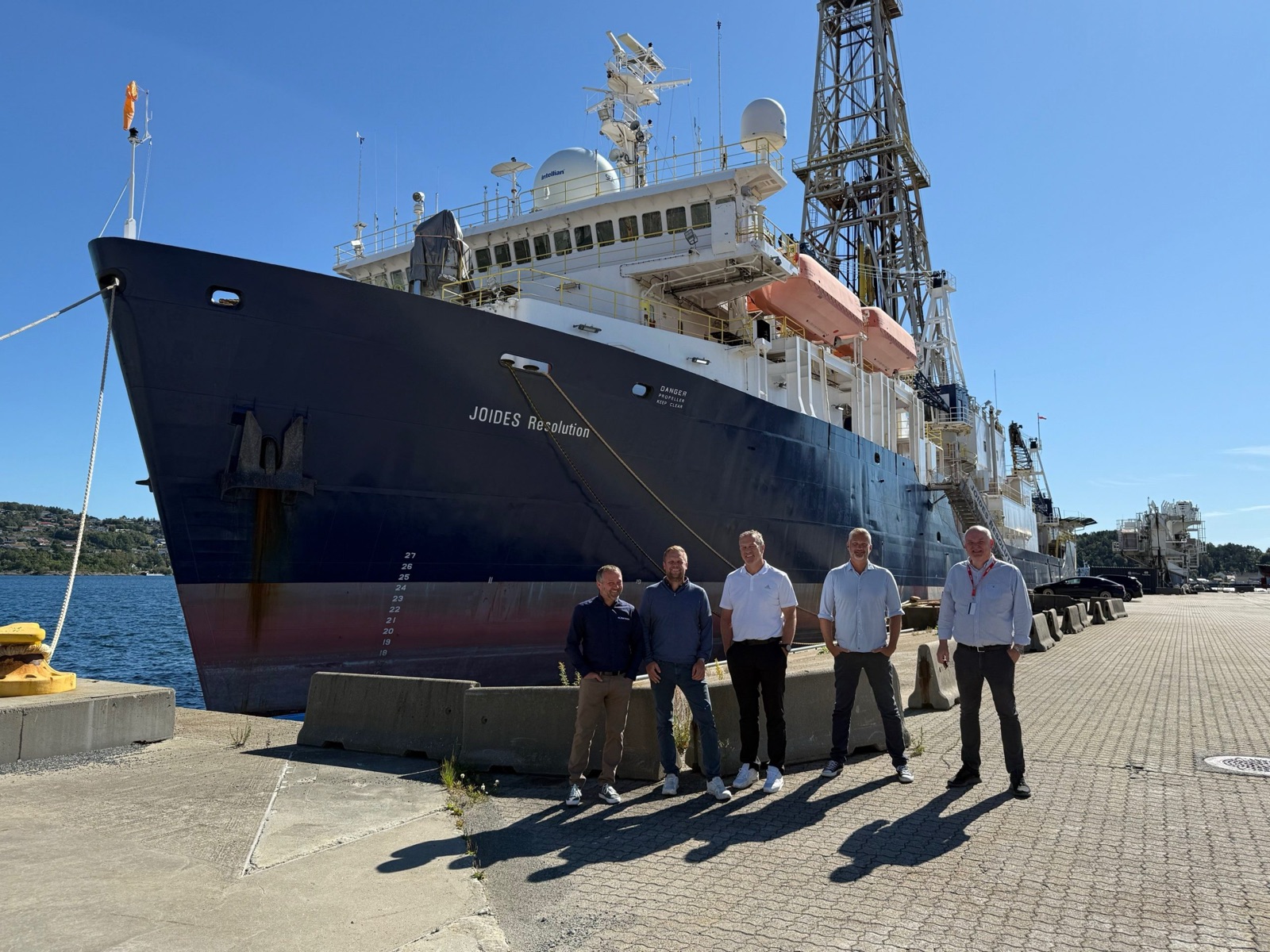
When founders Hans Eirik Onarheim, Espen Tolfsen, Stein Erik Andersen, and Atle Fiskebekk recently stood by the ship alongside Sea1 Offshore’s IT Manager, Terje Engebretsen, it was with mixed emotions. The ship, now destined for scrap, was their very first assignment – and the beginning of the Globetech adventure.
“It feels strange that the ship that’s been with us since day one is now going to be turned into nails. Joides has always been special to us, not just because it was our first project, but because of all the wonderful people we met on board,” says CEO Hans Eirik Onarheim.
A journey to Curaçao – and the start of something big
It’s been 14 years since the founders left Kjevik Airport on the “pajama flight” to Amsterdam and onward to Curaçao. Carrying plastic bags full of laptops – because they hadn’t had time to buy backpacks – they boarded Joides Resolution, docked in Caracas Bay, surrounded by turquoise waters and dolphins.
“We were in paradise. The project was huge, and we worked closely with the crew for an entire month. It created a bond unlike anything we’ve experienced,” says COO Atle Fiskebekk.
The assignment was to deliver a high-availability IT solution to a ship that rarely docked. Globetech provided a server cluster, infrastructure, and 28 workstations – a complex delivery that gave the company the financial room to grow.
“The scope of the project reduced risk and provided a solid foundation for the road ahead,” says Senior Consultant Stein Erik Andersen.
Joides Resolution – A cornerstone in marine research
The ship was built in 1978 in Halifax as a drilling vessel for oil but was converted into a research ship in 1985. Since then, it has been a key player in international geoscience, providing researchers with access to geological and climate data from the ocean floor.
Joides Resolution has contributed to:
- Reconstruction of past climate changes, such as the Paleocene-Eocene Thermal Maximum
- Understanding geological risks like earthquakes and sea-level rise
- Training new generations of scientists and fostering international collaboration
In 2023, it was announced that the NSF would not renew the operating agreement, and 2024 marks the end of the ship’s regular operations.
Globetech – From one delivery to global growth
Since that first assignment, Globetech has grown from four employees to over 30, and from 18 ships under contract to more than 200. The Joides project became an important reference point for complex offshore deliveries and built trust in the market.
“It marks that nothing lasts forever, and that we must adapt to change. The ship returns to port just as we enter a new phase of growth,” says Hans Eirik Onarheim.
Reflection and the future
The founders remember the excitement and uncertainty of that first day, but also the passion that drove them.
“We had a fundamental mindset: think long-term, be honest, and do a good job. That has shaped our culture and still guides us,” says Atle Fiskebekk.
As one chapter ends, another begins. Joides Resolution has done its part – but Globetech’s journey is far from over.